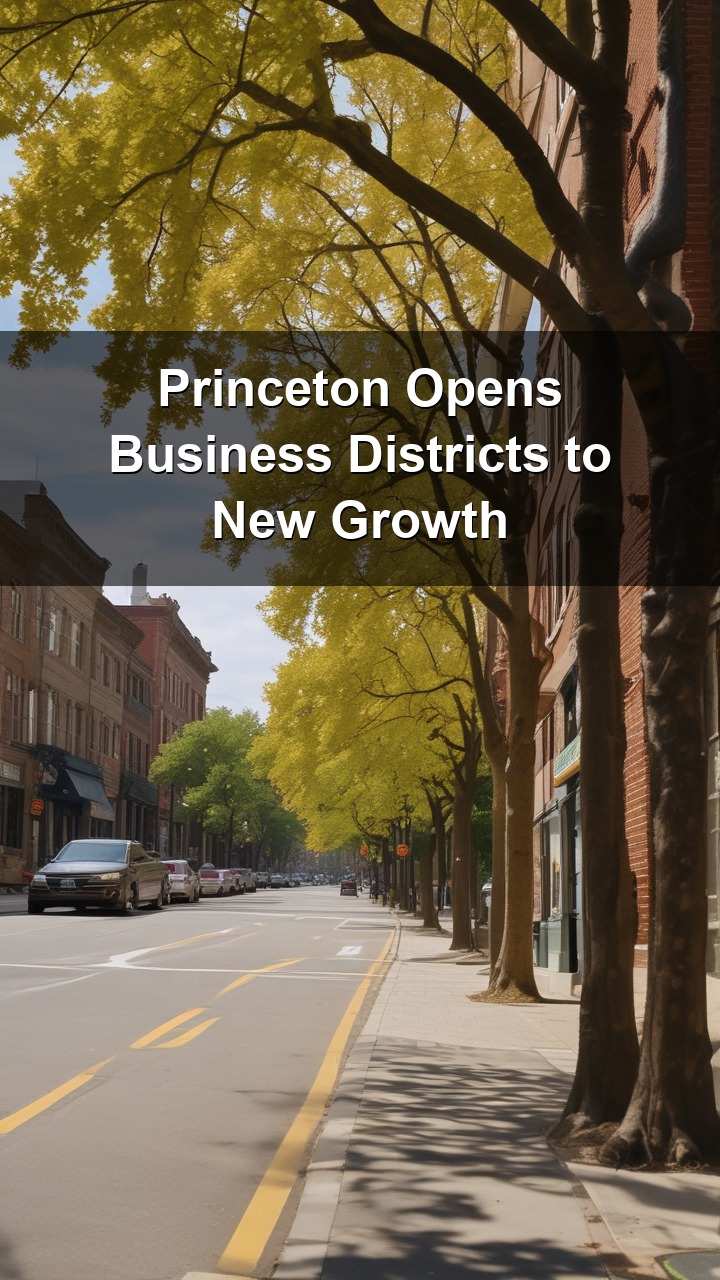
Princeton just expanded what's allowed in its business districts, and it's reshaping how the town grows.
When a municipality relaxes zoning restrictions, it typically signals confidence in the area's future and opens doors for mixed-use development, office-to-residential conversions, and new services that weren't permitted before. In Princeton's case, this matters because the town's business corridors are central to its identity and economic vitality.
For buyers in the Greater Princeton area, this can translate into more neighborhood amenities, increased walkability, and commercial activity that supports residential values. For sellers, expanded business district uses can signal neighborhood investment and modernization, which appeals to buyers seeking vibrant, mixed-use communities. Property values in well-positioned areas near these business zones often respond positively when flexibility increases.
The broader picture: zoning flexibility isn't just about commercial real estate. It reflects how the municipality is thinking about future growth, whether it's attracting new businesses, supporting local entrepreneurship, or adapting to changing work patterns. All of that feeds back into residential desirability and market dynamics.
If you own or are considering property in or near Princeton's business districts, now is a good time to understand how these changes might affect your street, neighborhood, or investment timeline. We track these zoning shifts closely at https://thewuteam.com because they're often early signals of where the market is heading.
Share your thoughts below

Leave a comment